Somewhere today, an AI assistant described your company to a prospective customer, an investor doing diligence, or a journalist on deadline. It stated facts about your pricing, compared you to competitors, and framed your weaknesses — with total confidence, from whatever it retrieved and remembered. Monitoring what it said is no longer exotic. It is the same discipline as rank tracking, applied to a new surface.
Why casual checking fails
The obvious move — open ChatGPT, ask about your brand — produces unusable data three ways. Your session carries personalization, so you see an answer shaped by your own history. A single run samples one draw from a stochastic process. And unstructured questions asked differently each time measure your phrasing, not the engine. The fixes are mechanical: clean sessions (API calls or logged-out contexts), fixed prompts, repetition on a schedule.
The prompt set
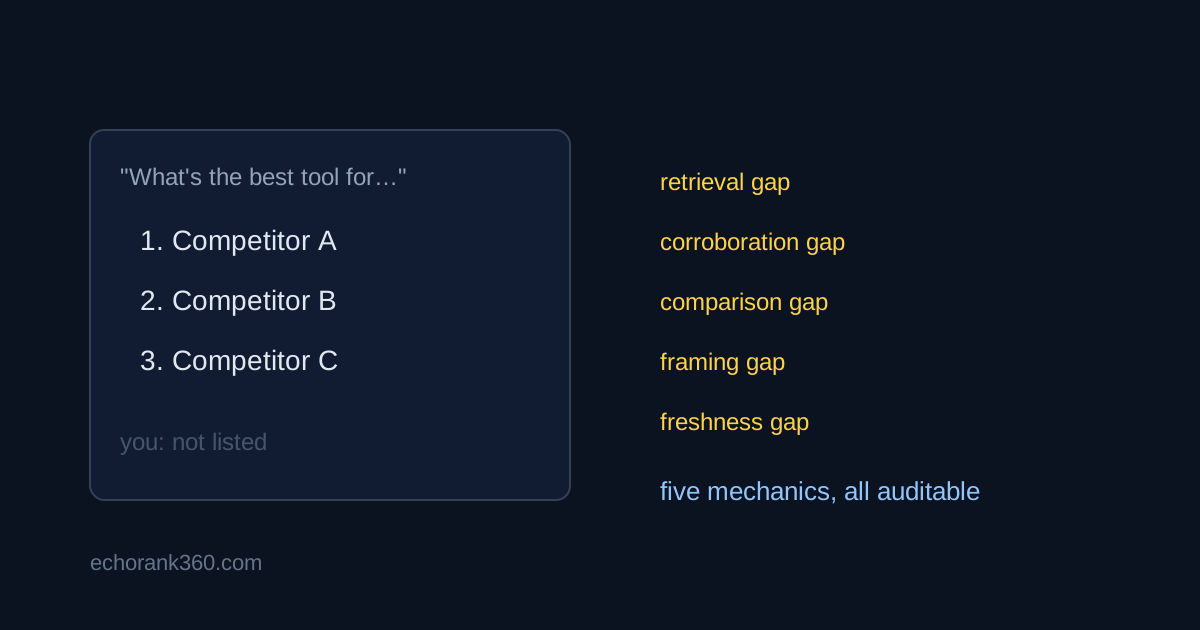
Build 10–20 prompts in three layers and then freeze them. Direct: "What is [brand]?", "Is [brand] legitimate?", "What are [brand]'s pricing and main drawbacks?". Category: the commercial questions where you want to be mentioned — "best [category] for [audience]", "[category] tools compared". Competitive: "[brand] vs [competitor]", "alternatives to [competitor]". The category layer usually carries the surprises: it is where you discover you are simply absent from answers your buyers see daily.
Freezing matters more than perfecting. A prompt set you keep editing produces data that measures your edits.
What to record
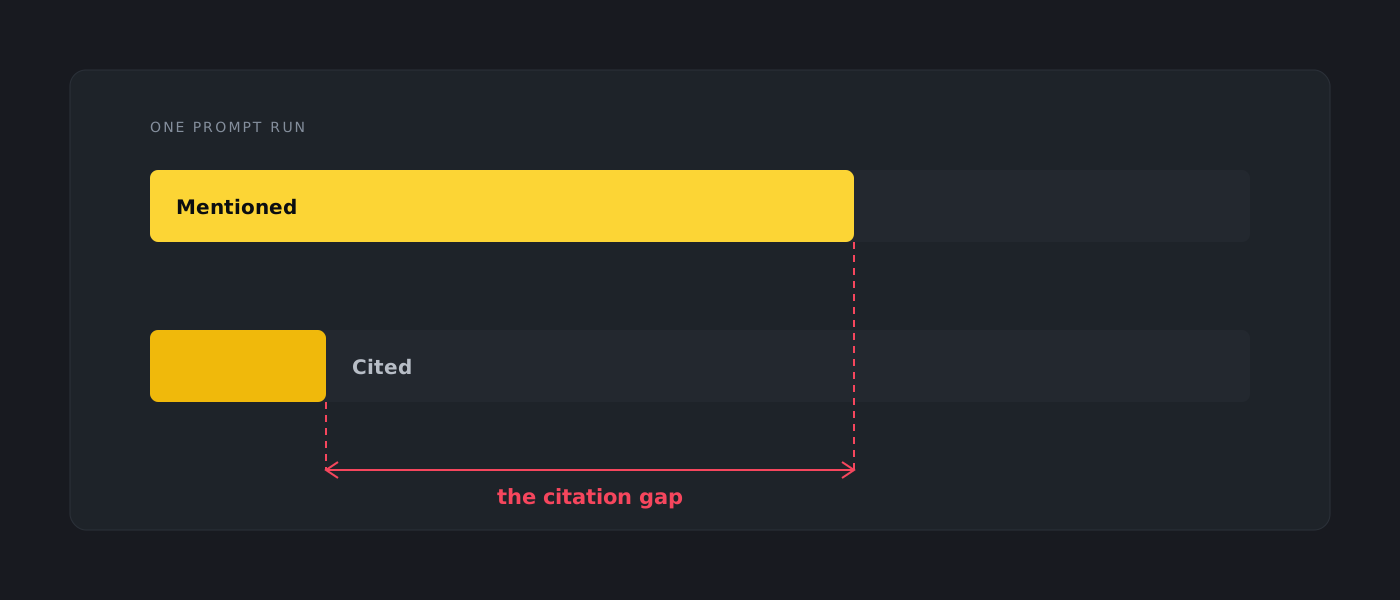
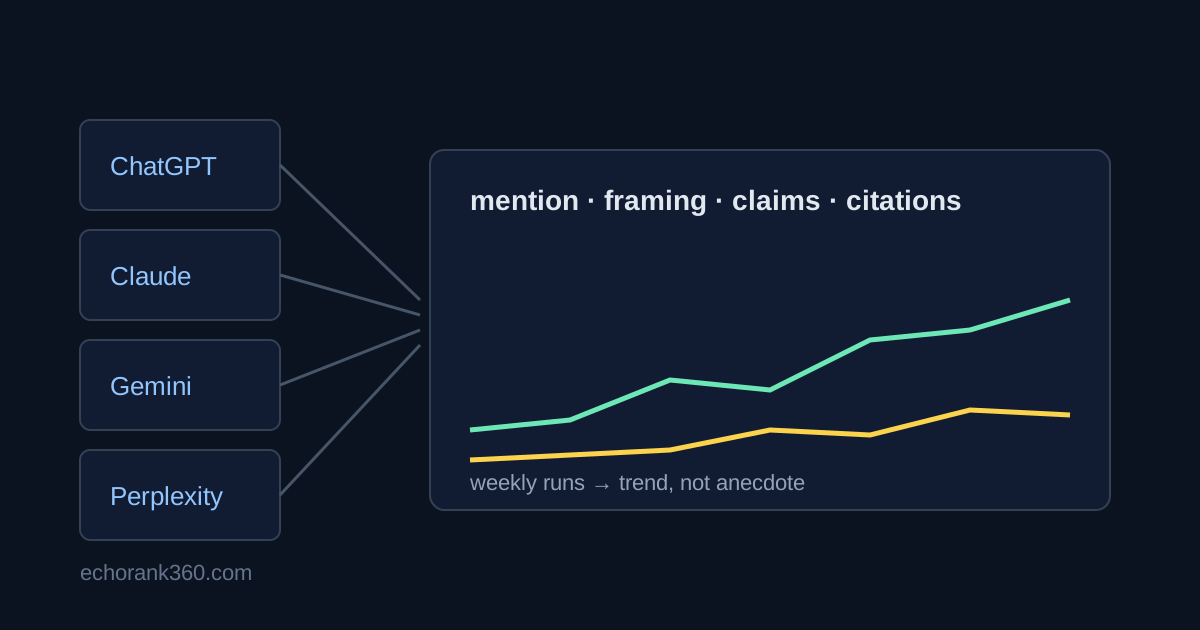
For every prompt × engine run, four fields. Mention: were you named at all. Framing: the actual phrase used to characterize you — "a newer entrant", "the budget option", "a well-regarded platform" — recorded verbatim, because framing shifts are the earliest reputation signal. Claims: concrete facts stated (pricing, features, company facts), each marked true or false. Citations: which URLs the engine leaned on, since those are the pages you would need to influence to change the answer.
Weekly cadence is the working default. Engines change retrieval behavior and model versions without notice; daily runs mostly measure that churn, monthly runs let a bad framing sit in front of buyers for weeks unnoticed.
Reading the output
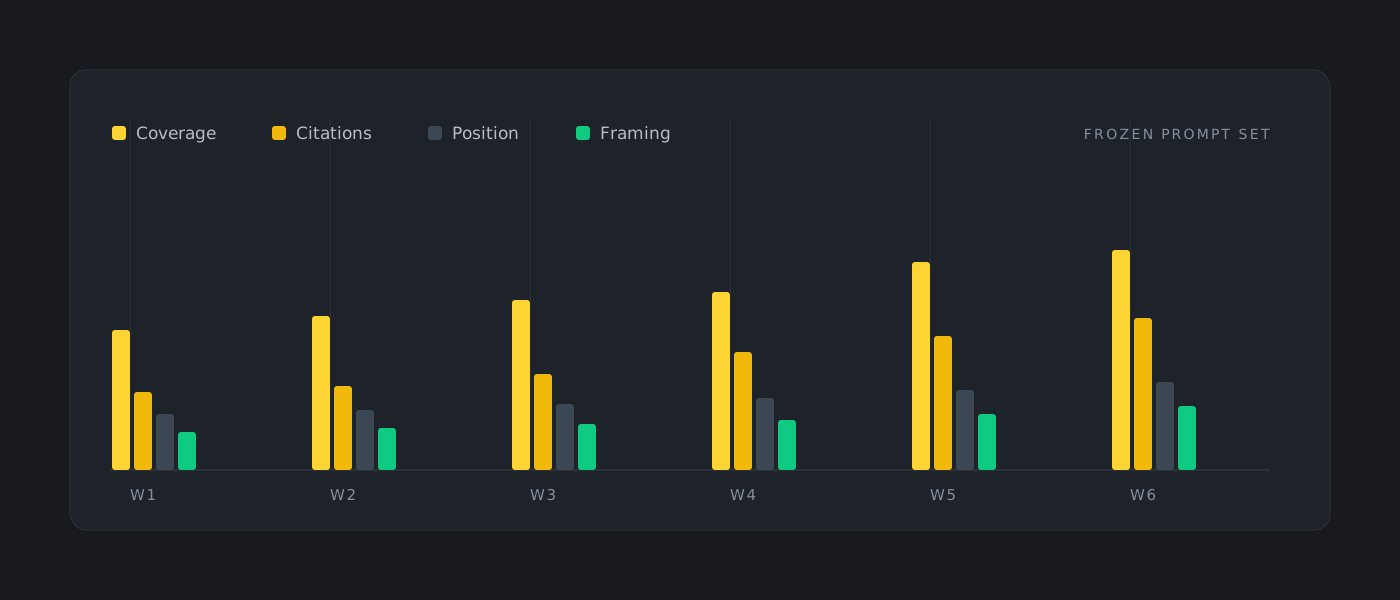
The value arrives as trend lines. Mention rate per engine over time is your share-of-voice curve. A framing change — "leading" quietly becoming "one of several" — is an event with a date, which you can correlate with a competitor's launch or a review site's update. A false claim with a citation is a to-do item with an address on it. And a citation you lose from a high-value answer tells you exactly which page stopped pulling its weight.
Run it manually in a spreadsheet to start; the method is what matters. Automate when the run count makes manual collection the bottleneck — which, once the trend lines start earning their keep in decisions, happens quickly.
Questions fréquentes
Why not just ask each AI what it thinks of my brand?
One-off checks from your own account inherit your history, memory and location, and a single run samples one draw from a probabilistic system. Signal comes from the same prompts, clean context, repeated on a schedule — the trend, not the snapshot.
Which engines should be in the rotation?
ChatGPT, Claude, Gemini and Perplexity cover most real usage, with Copilot worth adding for Microsoft-heavy buyer bases. Weight them by where your customers actually are, and keep the prompt set identical across all of them.
What do I do when an engine states something false about us?
Trace the citation first — engines with live retrieval usually repeat a source, and correcting or outranking that source fixes the answer at the root. For uncited claims from training data, publishing a clear, crawlable correction on pages engines retrieve is the available lever.