/ 01 — By industry
Echorank for professional services
Clients check you before they contact you. What an assistant says about your firm, and what your reviews say, is the shortlist.
/ 03
The referral still comes — but now it gets checked
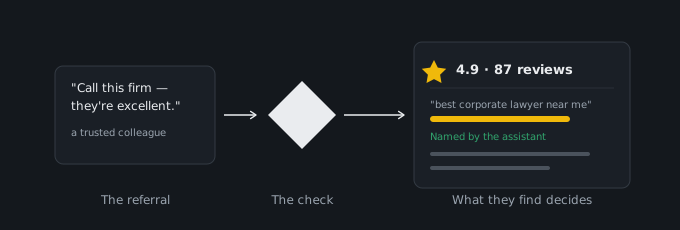
Professional services grew on word of mouth, and word of mouth still starts the journey. What changed is the second step: before calling the firm a colleague recommended, the prospect checks. They read the reviews, scan the rating, and increasingly ask an AI assistant to confirm the choice — 'best employment lawyer in Denver', 'is <firm> reputable'. A warm referral with a thin or mixed online profile quietly dies between the recommendation and the call, and you never learn it happened.
For a firm, that check is high stakes precisely because the purchase is high trust: nobody hires an accountant or a law firm the way they order lunch. The profile the prospect finds either confirms the referral or contradicts it — there is no neutral outcome.
/ 04
Reputation as evidence of expertise
Clients can't evaluate your work product before hiring you, so they evaluate proxies: what past clients say, how the firm responds to criticism, how consistently it's described across the sources they check. A review corpus that names specific matters — responsiveness, clarity on fees, outcomes — reads as evidence in a way a website's own claims never can.
Echorank builds that corpus deliberately. Review requests go out after matters close, timed and worded for a professional context; every review receives a response in the firm's voice — measured, specific, and mindful that confidentiality limits what can be said publicly. A calm, factual reply to an unfair review is read by every prospect who finds it, and it does more for the firm than the review did against it.
/ 05
Be the name the assistants give
The newest referrer isn't a person. When someone with no network in your specialty asks ChatGPT or Perplexity who to engage, the answer names two or three firms — assembled from directories, review profiles, rankings and the firm's own site. Being in that answer is a referral at scale; being absent from it is invisible, because no one tells you they asked.
The platform tracks the prompts that matter for your practice areas and locations, records when your firm is named, how it's described, and which sources the assistants lean on — then turns the gaps into a fix list: the directory entry that's inconsistent, the practice-area page that doesn't exist, the review profile that's strong but unclaimed. Ten minutes a week for the partner who owns the firm's name; the watching runs by itself.
/ 06 — PROFESSIONAL SERVICES
Built for firms that live on trust
Not sure where to start?
Run the free AI visibility audit. No account needed, and it takes about a minute.