/ 01 — By role
Echorank for SEO professionals
Rank tracking and crawls are table stakes. The new work is whether assistants quote the page at all, and that needs measuring too.
/ 03
The SERP is no longer the whole job
You already run the classic discipline: keyword research, rank tracking, technical audits, link analysis. But a growing share of the queries you optimize for are now answered before the click — in AI Overviews, in ChatGPT, in Perplexity — and those answers have their own ranking logic: entity clarity, citable sources, review corpora, crawlable structure. A page can hold #3 in the SERP and be invisible in the answer above it.
That second surface is measurable. The assistants can be queried on the prompts your clients' customers actually ask; the answers can be parsed for who gets named, cited and recommended; and the citations point at exactly which pages earned each brand its slot. Which means AI visibility stops being a talking point and becomes a column in your tracking — with the same weekly cadence and the same accountability as positions.
/ 04
Two disciplines, one workflow
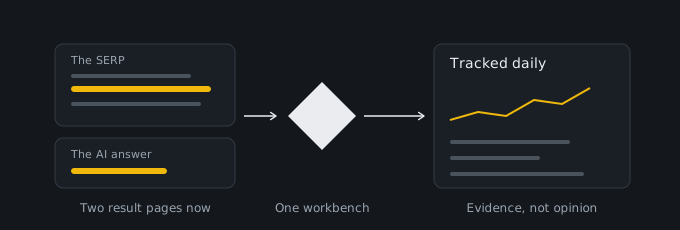
Echorank runs both from the same keyword set. Classic side: rank tracking with daily movement, SERP snapshots, share-of-search, site audits, backlink analysis and Search Console cross-checks. AI side: the same intents phrased as prompts, executed across the major assistants, with mentions, positions, sentiment and citation sources recorded per answer.
The overlap is where the leverage is. The comparison pages and review corpora that win AI citations are usually the same assets that lift classic rankings; the technical fixes that make a site crawlable feed both. Instead of running a GEO project next to an SEO retainer, you run one prioritized backlog where every item shows which surface it moves — and the near-miss queries at position 8–20 with an AI answer naming nobody yet are flagged as the cheapest wins on the board.
/ 05
Recommendations that survive scrutiny
Every recommendation you make gets challenged — by a client, a dev team, or a stakeholder who read a different blog. The defensible ones come with receipts: the crawl that shows the duplication, the SERP snapshot that shows who overtook you and with what, the AI answer that cites a competitor's comparison page you don't have.
The toolkit is built for that evidence chain. Findings arrive with the artifact attached, not a summary of it — so the recommendation, the proof and the expected effect travel together into whatever document the decision gets made in. Fewer meetings arguing about whether the problem exists; more sign-offs on the fix.

/ 06
The daily read, the weekly move
The working rhythm is short: a daily read of what moved — positions, new AI answers, review shifts — with the changed artifact one click away, then a weekly decision about where the next unit of effort goes. Volatile prompts and slipping pages surface themselves; stable ones stay out of your way.
Everything rolls up per project, so the same data serves the practitioner view and the client-facing one: the report your client reads is assembled from the evidence you worked from, not rebuilt for the occasion. When something jumps or breaks, you knew before they asked — which is, in the end, most of what a retainer buys.
/ 07 — FOR PRACTITIONERS
A working toolkit, not a dashboard tour
Not sure where to start?
Run the free AI visibility audit. No account needed, and it takes about a minute.