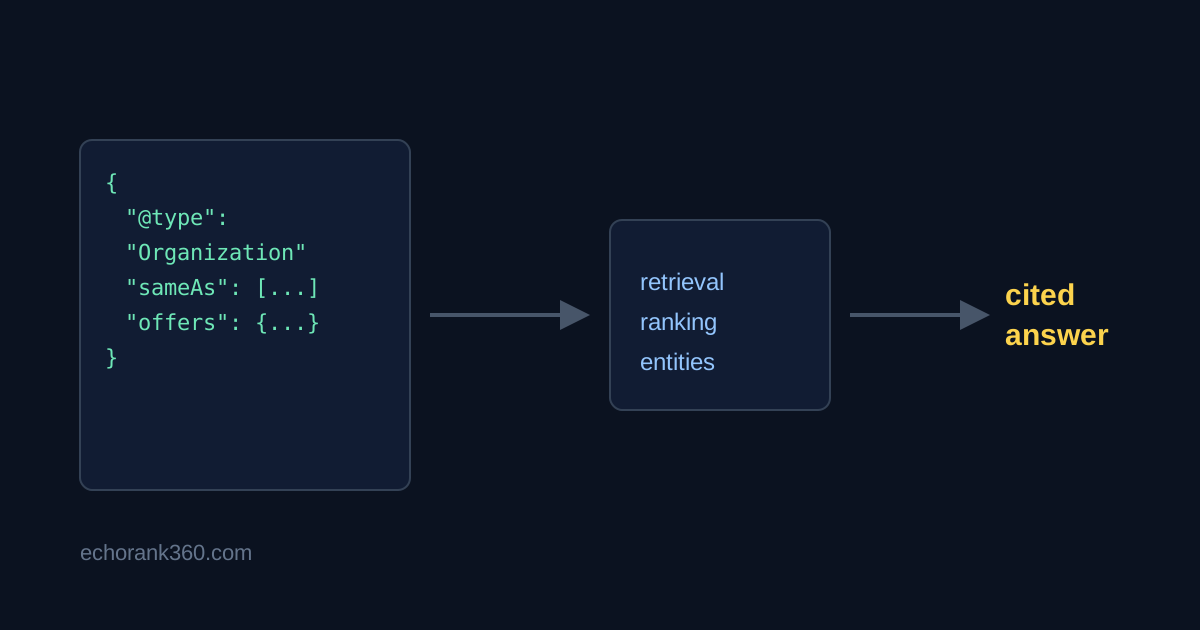
"LLMs understand natural language, therefore schema is obsolete" gets the architecture wrong. The model is the last stage of an answer pipeline. Before anything reaches it, a retrieval system decided which pages were candidates, a ranker decided which candidates were worth reading, and — for several engines — a knowledge graph decided which entities the question was even about. Those earlier stages are where structured data does its work.
Where schema acts in the pipeline
Entity resolution. When an engine needs to know whether "EchoRank" in a query means a company, a product or a typo, Organization markup with sameAs links to your other profiles is the cheapest strong signal available. Entities that resolve cleanly get knowledge-graph entries; entities with knowledge-graph entries get described accurately in answers.
Candidate classification. Retrieval indexes store page type. A pricing question retrieves against pages classified as product and offer pages; a how-to question retrieves against instructional content. Product with Offer, Article with real dates and authorship, and HowTo with steps are how that classification happens without guesswork.
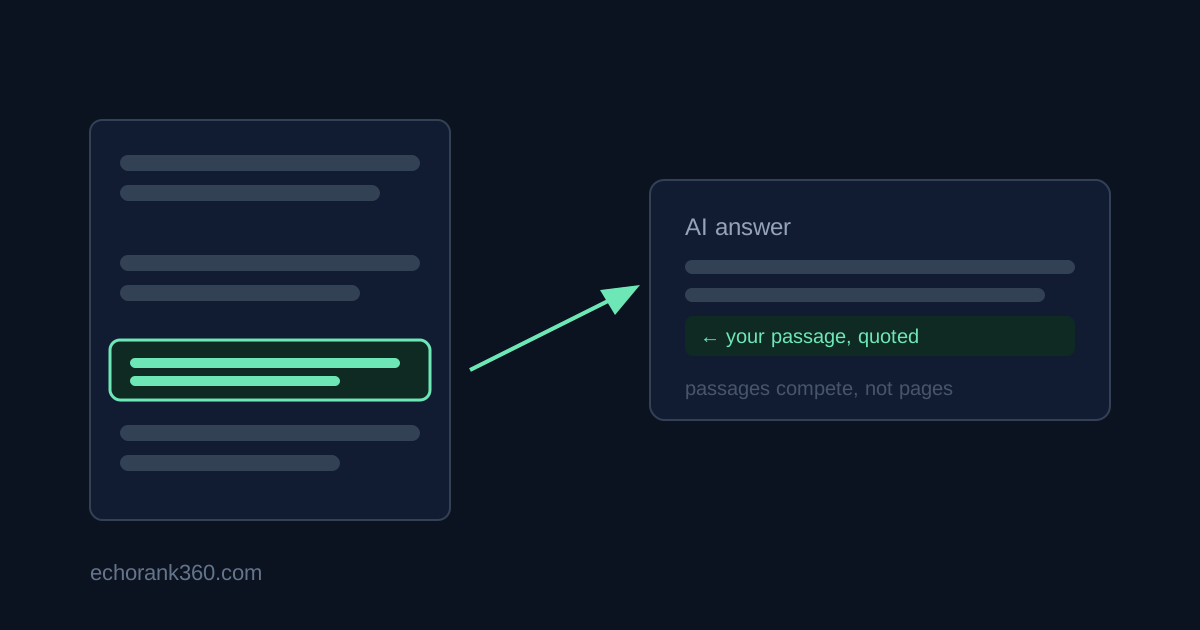
Answer assembly. Question-shaped content is disproportionately quotable. FAQPage markup on top of visible Q&A pairs gives engines pre-segmented, self-contained units that survive being lifted out of context — which is precisely what an answer engine does to your page.
The types that pull weight
Ranked by return on effort for a commercial site: Organization (one canonical block, sitewide, with logo, sameAs and a real description), Product/Service with priced Offer data where applicable, Article with dateModified you actually maintain, FAQPage wherever genuine questions are answered on the page, and HowTo for stepwise content. BreadcrumbList earns its keep indirectly by making site structure legible.
Skip the folklore: sprinkling Review markup without reviews, Speakable on everything, or schema types chosen because a checklist listed them. Coverage is not the metric. Agreement is.
Consistency is the actual ranking factor
Every field in your markup is a claim that can be checked against the visible page, against your other pages, and against the rest of the web. AI systems are notably good at exactly this comparison. A price in the offer block that differs from the rendered price, a company founding date that varies across three pages, an author who does not exist — each is a small contradiction, and contradictions are how probabilistic systems learn to hedge about you. The hedge shows up later as "sources differ" phrasing in answers, or as the engine citing a competitor whose facts agree with themselves.
The operating rule: markup describes the page exactly as rendered, one source of truth generates the recurring blocks (Organization especially), and every claim you cannot verify stays out. Schema will not make a model smarter about you. It makes the pipeline around the model less likely to misfile you — and misfiled pages do not get cited.
Questions fréquentes
Do LLMs read JSON-LD directly?
Sometimes — when a retrieval agent fetches raw HTML, the JSON-LD block is in the payload, and models parse it fine. But the bigger effect is upstream: search indexes and knowledge graphs built with structured data decide which pages are retrieved at all.
Is FAQPage schema still worth adding after Google reduced FAQ rich results?
For AI visibility, yes. The rich-result cutback changed what Google displays, not what pipelines parse. Question-answer pairs in both markup and visible prose map directly onto how answer engines assemble responses.
Can I add schema for content that is not visibly on the page?
Do not. Markup that describes invisible content is treated as spam by search engines and creates contradictions for AI systems comparing markup against prose. Schema should describe exactly what a reader sees.