An answer engine does not experience your page the way a visitor does. It splits the page into passages, embeds them, retrieves a handful that match a question, and composes an answer from whichever passages state things clearly enough to reuse. That pipeline has concrete structural preferences, and writing toward them is the most direct lever in GEO — because it operates at the moment of citation itself.
Passages compete, not pages
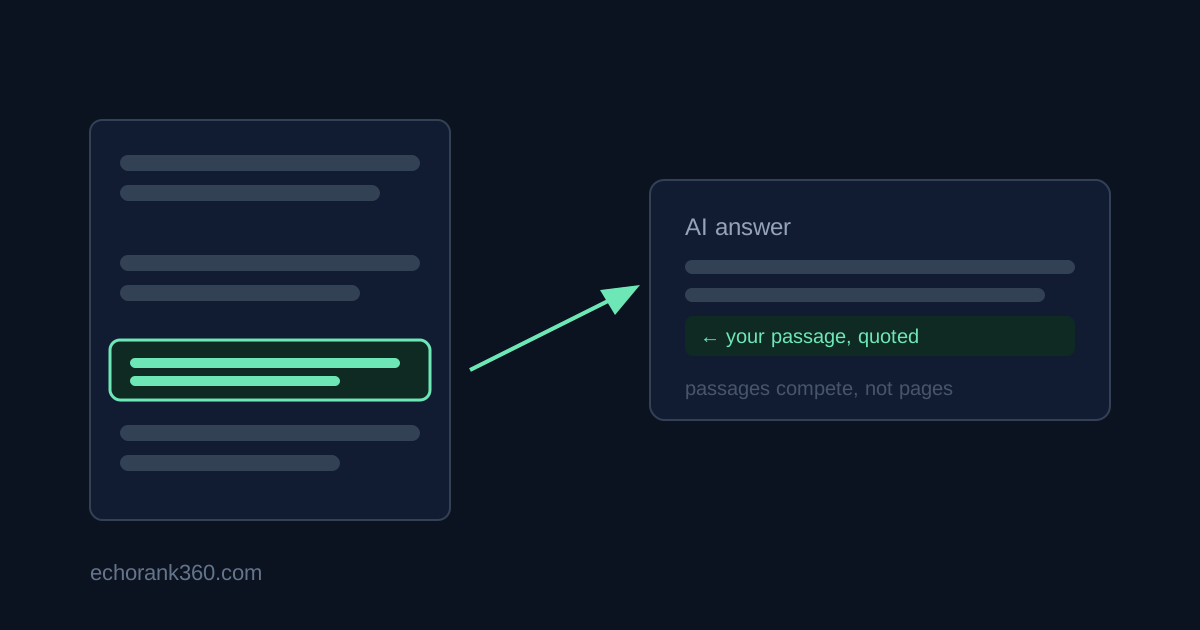
The unit of AI retrieval is the passage: a heading and the prose under it, more or less. Your beautifully argued 2,000-word essay competes as fragments, each fragment against fragments from every other site. The immediate implication is that every section must be comprehensible with zero surrounding context. A section that opens "This is why the previous approach fails" is dead on extraction — *which* approach? A section that opens "Fixed prompt sets outperform ad-hoc checking because repeated identical queries isolate engine changes from phrasing changes" carries its own context and survives being lifted.
The test: read each section alone, as if it were the only thing on the internet. If it needs the section above to make sense, it will not get quoted.
Answer first, then elaborate
Human writing builds to conclusions. Extractable writing states them and then earns them. Under every heading, the first one or two sentences should contain the direct answer to the question the heading implies; the evidence, nuance and caveats follow. Engines assembling an answer under time and token pressure reach for passages where the payload is at the top — and question-shaped headings ("How often should you re-run a prompt set?") map onto queries far more directly than clever ones ("Timing is everything").
Claims that get quoted
Compare two sentences a model might reuse. "Our platform delivers industry-leading monitoring" — unverifiable, promotional, skipped. "Weekly monitoring runs catch framing changes within days, while monthly checks leave false claims in front of buyers for up to four weeks" — specific, mechanical, quotable. The pattern generalizes: numbers over adjectives, mechanisms over assertions, dates on anything time-sensitive, and named sources for anything borrowed. Engines under pressure to sound authoritative borrow authority from precise sources; vagueness gives them nothing to borrow.
Definitions deserve special mention. Plainly stated definitions — "X is Y that does Z" — are the single most-quoted sentence shape in AI answers. If your page defines the category term, write the definition as a sentence, not as an implication spread across three paragraphs.
Structure that machines can parse
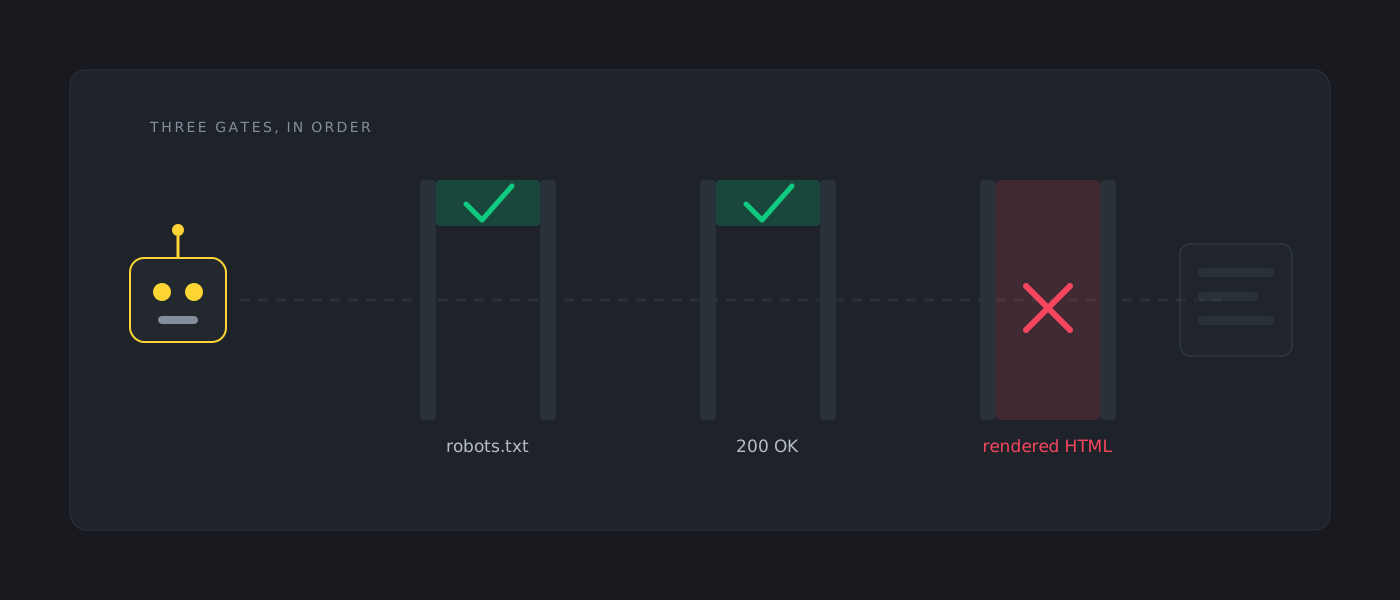
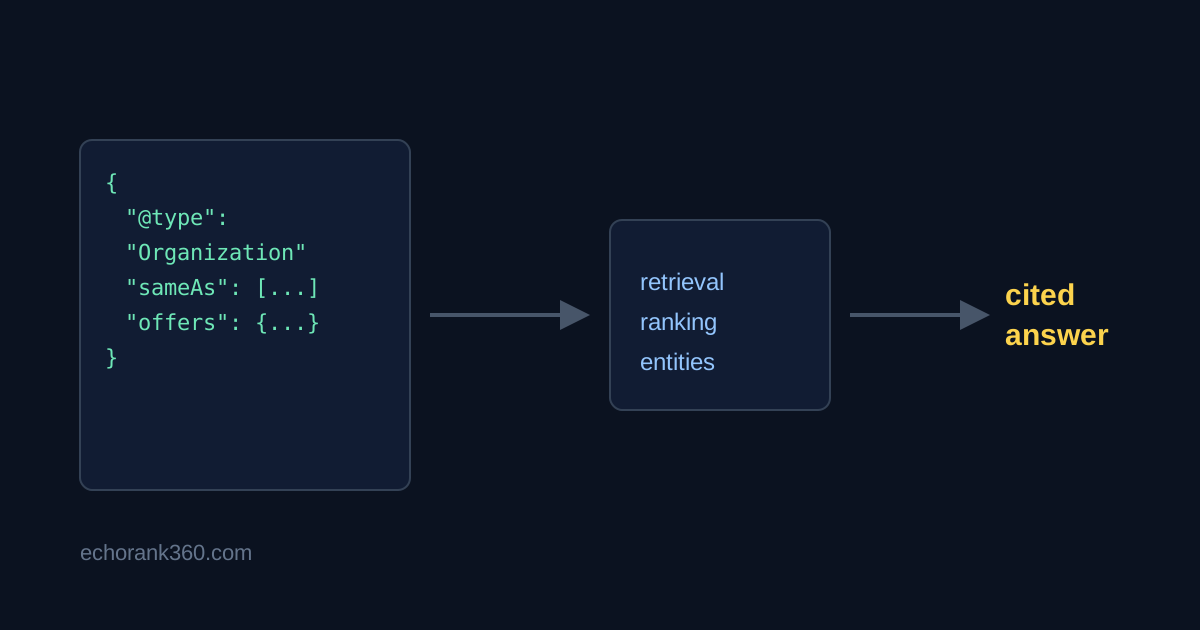
The boring fundamentals carry real weight at the passage level: one idea per heading; a heading hierarchy that is actually hierarchical (h2 sections, h3 sub-points, no skipping levels for styling reasons); semantic HTML rather than styled divs; tables with header rows for anything comparative; content present in the served HTML rather than assembled client-side. None of this is new advice. What is new is the cost of ignoring it — a passage that parses badly is not ranked lower, it is absent.
Structured this way, a page serves both readers it will ever have: the human who skims for the answer, and the machine that lifts the answer out. They want the same thing.
Questions fréquentes
Does this mean writing for robots instead of people?
The overlap is nearly total. Answer-first sections, self-contained passages and concrete claims are exactly what a skimming human wants too. The style that extracts well reads well; the casualty is only the meandering intro.
How long should sections be?
Roughly 75–300 words per heading — long enough to carry a complete claim with support, short enough to fit retrieval windows whole. A 900-word wall under one heading gets chopped arbitrarily, and arbitrary cuts lose the argument.
Do lists and tables help or hurt?
Help, when they carry real content — steps, comparisons, specs. Engines lift well-labeled tables and honest lists directly into answers. Decorative bullet-fication of prose adds structure signals without adding extractable claims, and does nothing.