/ 01 — By role
Echorank for content marketers
The measure of a page is changing. Ranking still matters, but so does whether an assistant reaches for your wording when it answers.
/ 03
Write what two audiences will quote
Every piece you publish now performs for two readers: the buyer skimming for an answer, and the AI assistant deciding whether your page is worth quoting when someone asks it the same question. They reward the same things — a direct answer near the top, specifics instead of throat-clearing, structure a machine can parse, claims a citation can hang on — but almost no content calendar is built with the second reader in mind.
That second reader is worth planning for, because its output is compounding: a page an assistant starts citing gets surfaced for every variant of the question, indefinitely, without another dollar of distribution. The skill isn't new writing; it's knowing which questions are being asked of the assistants and what their current answers are missing.
/ 04
Briefs from evidence, not brainstorms
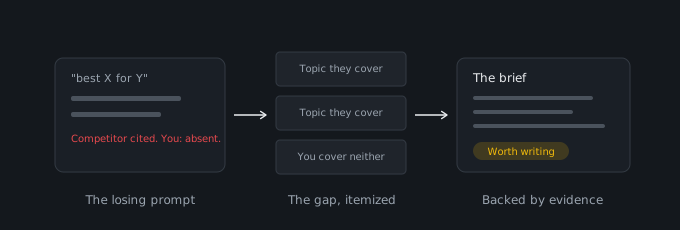
The weakest link in most content operations is how topics get chosen: a keyword list, a competitor's blog, a brainstorm. Echorank replaces that with observed demand. Content gap analysis starts from the prompts where competitors get named and you don't, pulls the pages that earned their citations, and itemizes the topics those pages cover that yours don't.
What lands in your queue is a brief with its justification attached: the prompt at stake, the missing topics, the sources currently winning it, and the search demand behind it. Prioritization stops being taste — it's the size of the prompt times the size of the gap.
/ 05
Measure pieces where they actually perform
Traffic is a lagging, partial measure — a piece can drive zero clicks and still be doing its best work as the source an assistant quotes. Every published piece gets tracked on three surfaces: its rank in classic results, whether it's cited in AI answers on the prompts it targets, and what it contributes to how assistants describe your brand.
That changes retrospectives. Instead of 'this post got 400 visits,' you can say 'this comparison page is now cited in four of the six answers where we used to be absent' — which is a sentence budget owners understand, and a much better guide to what to write next.

/ 06
A calendar that closes its own loop
The rhythm becomes circular: tracked prompts reveal gaps, gaps become briefs, published pieces get measured on the prompts that motivated them, and the results reorder the queue. New prompt discovery keeps the pool fresh — questions pulled from search data, People-Also-Ask and the assistants themselves, so the calendar tracks what the market is asking this quarter, not last year.
None of it requires more writing than you're doing now. It requires aiming the same output at questions with evidence behind them — and being able to show, piece by piece, that the aim was right.
/ 07 — FOR CONTENT TEAMS
Content strategy with receipts
Not sure where to start?
Run the free AI visibility audit. No account needed, and it takes about a minute.