/ GUIDE
AI visibility, from zero to tracked
A growing share of your next customers never see a results page: they ask ChatGPT, Perplexity or Gemini who to use, and pick from the answer. This guide shows how to find out what those answers currently say about you, turn that into a tracked number, and move it.
What you'll need
- A live website for your business
- 10 minutes for the audit and your first prompt list
- An Echorank account for ongoing tracking (the audit itself needs none)
Interface labels change as the product ships. If a name here does not match what you see, check the current interface — the workflow is the same.
1Understand what you're measuring
AI visibility is whether — and how — assistants bring you up when someone asks a question in your market: 'best accountant in Leeds', 'is <your brand> legit', 'alternatives to <competitor>'. Unlike a ranking, an answer has no fixed ten positions. What matters is being mentioned at all, being among the first names, being described positively, and being cited as a source.
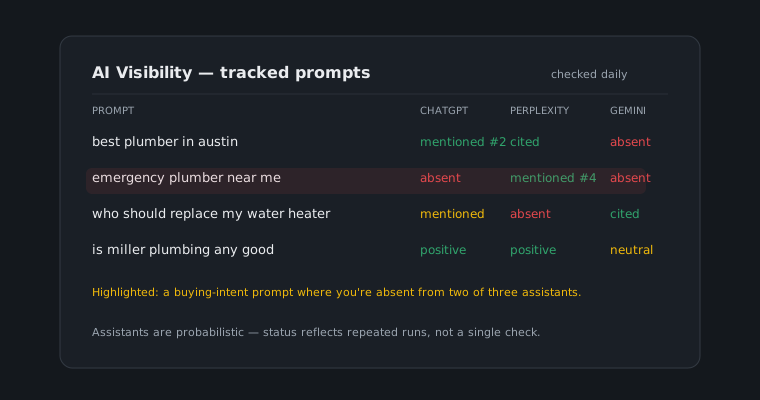
Assistants are also probabilistic: the same question asked twice can produce different answers. A single check tells you almost nothing — visibility is only meaningful as a rate over repeated runs. That's why this is a tracking discipline, not a one-off lookup.
2Run the free audit for your baseline
The free AI visibility audit is the fastest honest snapshot: it asks the major assistants about your business and your category, and reports where you appear, where you're absent, and who gets named instead. No account needed, and it takes about a minute.
Treat the result as day zero, not a verdict. Most businesses that have never worked on this score low — which is the point: the gap between you and the names in the answers is the size of the opportunity, and the audit's findings become the first fix list.
3Build the prompt list
Prompts are to AI visibility what keywords are to rank tracking. Start from three groups: buying-intent questions ('best X in <city>', 'who should I hire for Y'), brand questions ('is <brand> good', '<brand> reviews'), and competitor questions ('alternatives to <competitor>', '<competitor> vs <brand>').
Phrase them the way a customer talks, not the way a keyword tool abbreviates — assistants answer conversational questions. Ten to twenty prompts is plenty to start; the tracker checks each across the assistants on schedule, so every prompt you add is recurring work you're commissioning.
4Read what the answers record
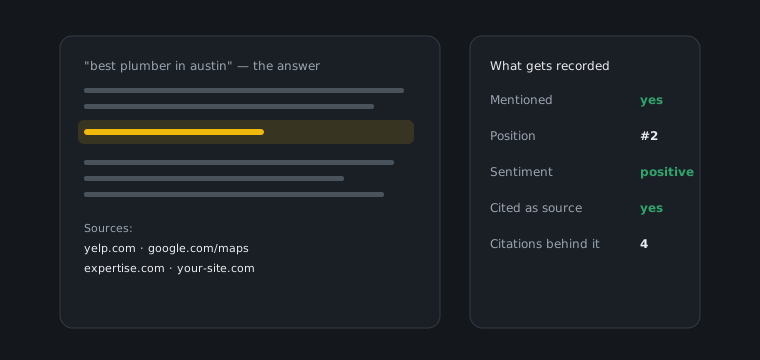
For every run, four things get recorded: whether you were mentioned, your position among the names given, the sentiment of how you were described, and whether you (or someone else) were cited as a source — plus which websites the assistant leaned on for the answer.
The citations are the actionable part. Assistants don't invent their recommendations; they synthesize them from sources — directories, review profiles, comparison pages, local press. When a competitor is named and you aren't, the cited sources are usually the explanation, and each one is a concrete place your absence can be fixed.
5Improve the answer, then watch it move
The levers are unglamorous and effective: a consistent business identity everywhere (one name, one address, one description), a healthy review profile that keeps growing, presence on the sources the assistants actually cite for your prompts, and pages on your own site that answer the tracked questions directly.
Work one prompt at a time. Pick a buying-intent prompt where you're absent, fix what its citations point at, and let the daily runs record the change. Movement typically shows in weeks, not days — the compounding is the reward: once you're in an answer, you tend to be served for every phrasing of the question.