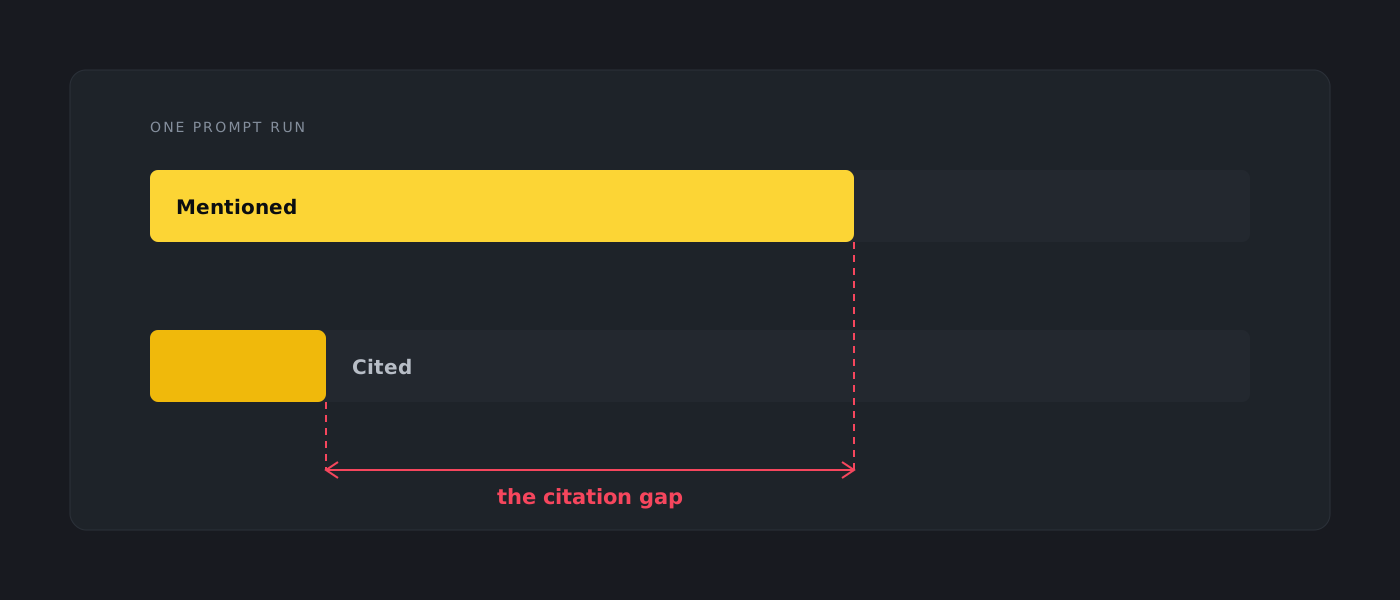
Your citation gap is the difference between how often AI answers mention your brand and how often they cite one of your pages as a source. Both numbers come out of the same prompt run: mention rate is the share of prompts whose answer names you, citation rate is the share whose source list links to you. Subtract one from the other and you have the gap. A brand mentioned in 60% of answers and cited in 15% has a 45-point gap, and that gap is almost always a content problem rather than a technical one.
It matters because the two do different work. A mention is recognition. A citation is the link a reader clicks, the source the engine treats as authoritative on the point, and the thing a competitor cannot copy from you.
Measuring the gap
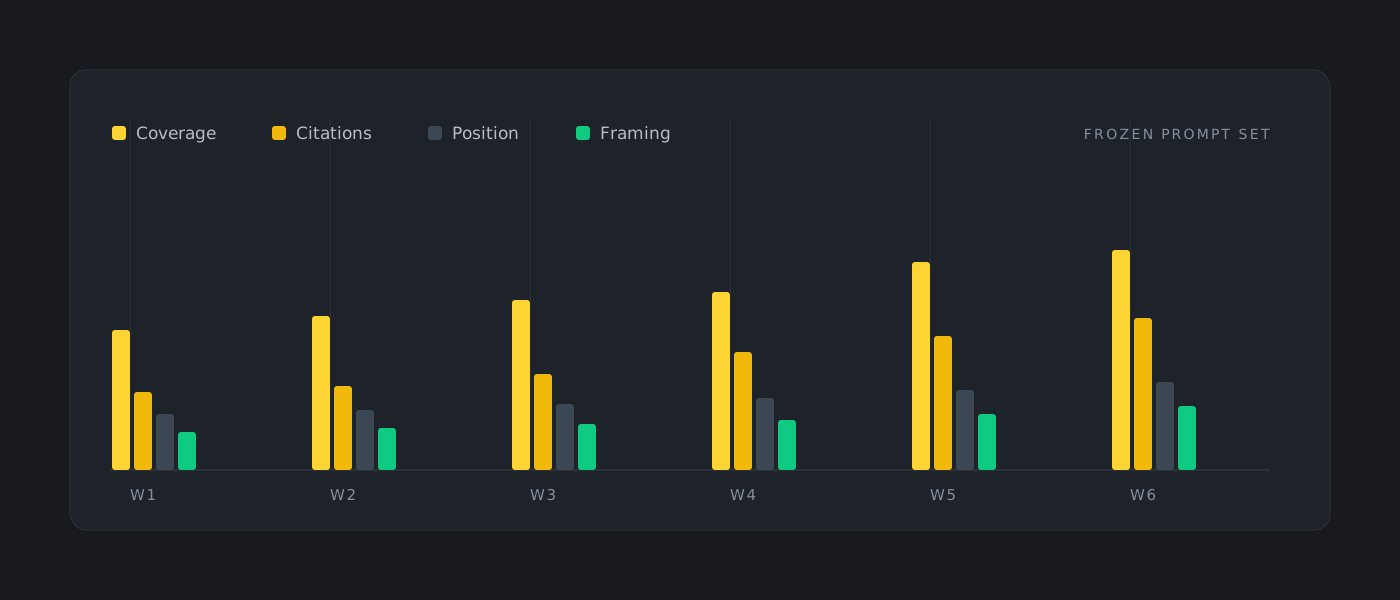
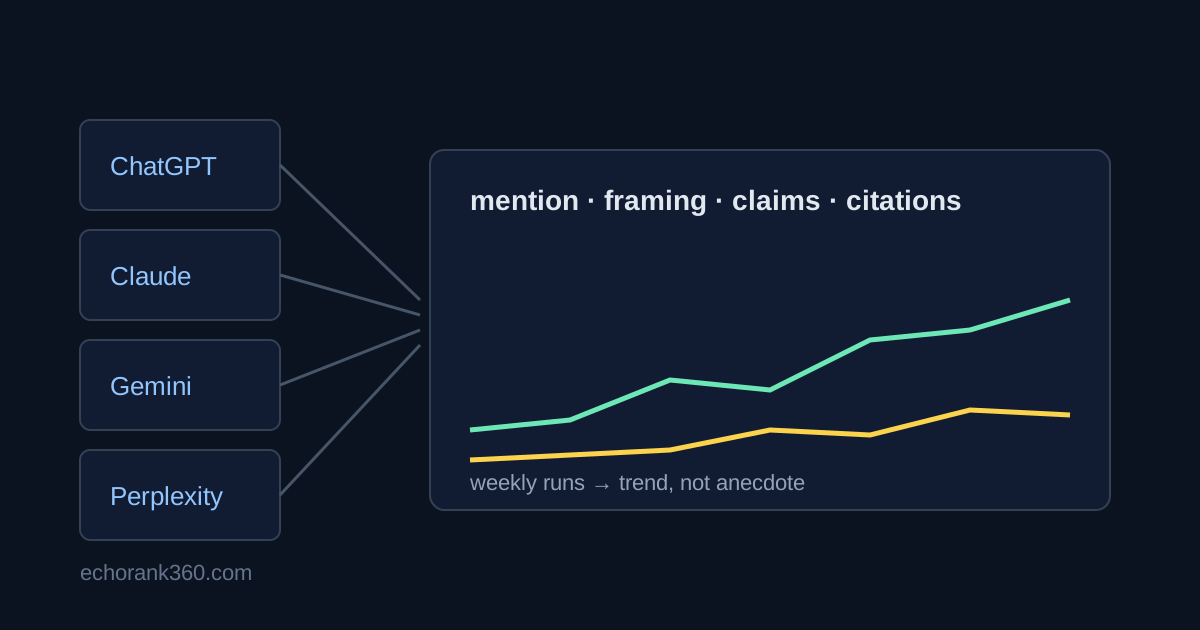
Run your frozen prompt set once and record two flags per answer: was the brand named anywhere in the prose, and does the source list contain a URL on your domain. Those two flags, averaged over the set, are your mention rate and citation rate. Nothing else is needed, and adding a third blended score at this stage only obscures which of the two moved.
If you have not built a prompt set yet, how to measure AI search visibility covers the construction and the session hygiene that make the numbers comparable week to week. The gap is only meaningful against a set that does not change.
One observed detail worth recording alongside the flags: which domain was cited instead of you. A gap filled by a review aggregator is a different problem from a gap filled by a direct competitor's comparison page, and they have different fixes.
Why the gap opens
The most common cause we see is pages that state conclusions without the specifics that make a passage worth lifting. An engine composing an answer needs a span of text it can quote or closely paraphrase, and attribute. "Our platform helps businesses improve their online reputation" is not that span. It contains no number, no condition, no scope and nothing that could be wrong — which also means nothing a summarizer would prefer over its own phrasing.
Compare two versions of the same claim:
Response time matters a great deal for reputation management, and businesses that reply quickly see better outcomes.
Replying to a Google review within 48 hours is the practical threshold; past that, the reply is usually below the fold of the review page and stops being read by the next prospect. This is our recommendation, not a platform rule — Google imposes no reply deadline.
The second is quotable because it is specific, bounded and honest about its own status. It also states what is a recommendation and what is a fact about the platform, which is the distinction a careful answer preserves and a vague one collapses.
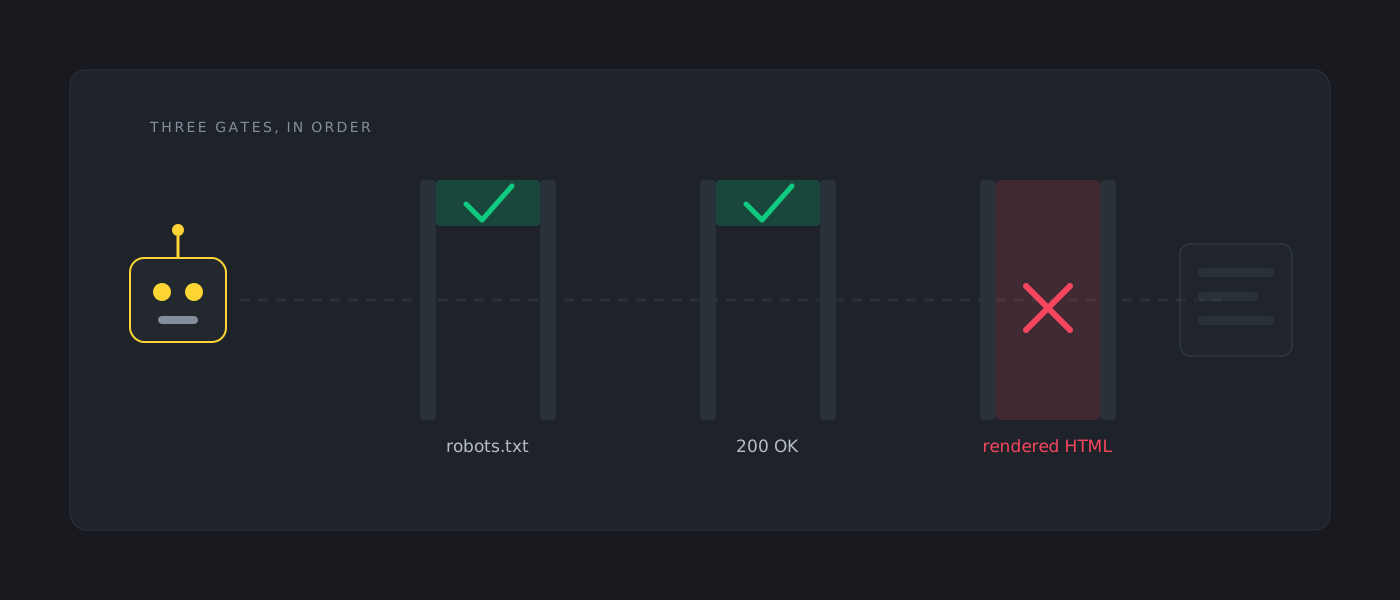
A second cause, less common but harder to see: the page is not retrievable in the first place. If crawlers cannot fetch it, or the substance arrives only after client-side rendering, no amount of rewriting will help. Rule that out first — making your site readable to AI crawlers is the check that takes an afternoon and occasionally explains everything.
What a citable passage looks like
A citable passage is self-contained, sits directly under a heading that matches the question, and carries at least one specific: a figure, a threshold, a named condition or a date. Self-contained is the property most often missing. If the sentence depends on the two paragraphs above it to make sense, it cannot be lifted, and an engine that cannot lift it will paraphrase your competitor instead.
Four properties, in rough order of how often they are the missing one:
- Self-contained. No "as mentioned above", no pronouns whose referent is in a previous section.
- Specific. A number, a range, a threshold or a date. "Fast" is not a specific; "under 48 hours" is.
- Scoped. State who it applies to. A claim true for enterprise and false for a sole trader should say so.
- Placed. Directly under an H2 or H3 that is phrased as the question a person would ask.
A concrete example of the rewrite. A pricing page that says "our plans scale with your business" gets replaced by a heading, "What does reputation monitoring cost for a multi-location business?", followed by: "Per-location monitoring is the usual model. Below roughly five locations, a single-site plan is normally cheaper; above that, per-location pricing wins because the alert volume, not the page count, is what drives the work." That passage answers the question on its own terms, and it can be quoted without the surrounding page.
Fix the pages that already carry the citations
Citations concentrate. In the runs we have looked at, a small number of pages accounts for most of a domain's citations, and those are almost never the newest pages — they are the ones with the clearest structure on the most-asked question. Our recommendation is to rewrite those before commissioning anything new, because a page already being retrieved and half-quoted is much closer to a citation than a page that does not exist yet.
A hypothesis we hold loosely, and state as one: the reason old pages dominate is not age itself but accumulated internal and external linking, which makes them the easiest thing to retrieve on the topic. If that is right, a new page on the same topic competes with your own strongest page rather than adding to it. We have not measured this cleanly enough to assert it.
Closing the gap: a checklist
- Record mention rate and citation rate from the same prompt run, weekly.
- Log which domain was cited when you were not.
- Rule out retrieval problems before rewriting anything.
- List the pages that already earn citations; rewrite those first.
- For each target question, add an H2 phrased as the question itself.
- Put a self-contained answer of 40 to 80 words directly under it.
- Include one specific per answer: a figure, a threshold, a condition or a date.
- Label recommendations as recommendations and facts as facts.
- Remove sentences that depend on the previous paragraph to parse.
- Re-run the frozen set after three weeks, not three days.
Know which problem you have
The gap is a diagnostic, not a goal. A brand with low mention rate and low citation rate has an inventory or access problem and should not be rewriting passages yet. A brand with high mention rate and low citation rate has exactly the problem this article describes. Telling the two apart takes one clean run of a frozen set. Before you commit a quarter of writing to either, run a free GEO audit as well: it will not give you a mention rate, but it will tell you whether your pages are fetchable and parseable in the first place — and if they are not, no rewrite is the right work yet.
Frequently asked
Is a citation gap always bad?
Not on its own. Being mentioned without being cited still builds recognition, and for a well-known brand a gap is normal. It becomes a problem when the sources being cited instead of you are your competitors, because then the answer credits your category position to someone else's page.
Does adding an FAQ schema block get me cited?
It helps a parser find the boundaries of a question and its answer, which is worth doing. But structured data does not make a weak answer quotable. In every comparison we have run, the passage that got lifted was the one with a specific figure and a stated condition, whether or not it carried markup.
How long does it take for a rewrite to show up?
Longer than a Google ranking change and with less regularity. The page has to be re-fetched, re-indexed by whatever retrieval layer the engine uses, and then actually selected. Treat anything under three weeks as too early to read, and keep the prompt set frozen while you wait.