/ 01 — By role
Echorank for growth marketers
Attribution is hard enough without a blind spot. AI answers are now a discovery channel, and most teams have no read on it at all.
/ 03
There's a channel missing from your dashboard
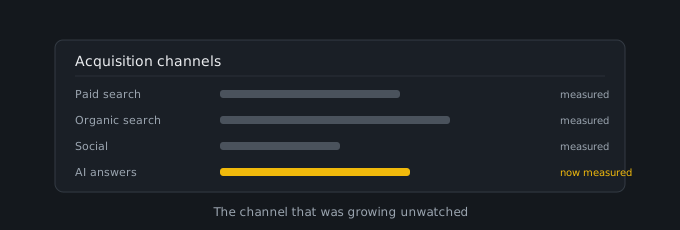
Your reporting covers paid, organic, social, email — every channel with a pixel. Meanwhile a growing share of buyers ask ChatGPT or Perplexity what to use and go straight to whatever the answer names. No referrer, no UTM, often no click at all: it shows up in your numbers as 'direct' or as brand searches you can't explain, which means a channel is growing or shrinking under your targets without a row in the sheet.
Echorank gives it the row. The prompts your buyers ask are executed across the major assistants on schedule; mentions, positions and recommendations are recorded per answer; and the result is a visibility trend and share-of-voice you can put next to every other channel — the same way you'd never run paid without impression data.
/ 04
Share of voice you can act against
Growth work starts from relative position: who's winning the demand you want, and where. The competitor matrix scores every rival on the prompts that matter — visibility, average position, citation frequency, sentiment — and shows where they're strong, where they're absent, and which sources earned them their slots.
That turns fuzzy 'AI strategy' into targeting. A prompt where a competitor dominates on the strength of two publisher citations is an outreach target. One where nobody is consistently recommended is open ground. The opportunity score ranks them by commercial value times gap, so the backlog orders itself.
/ 05
Run it like the experiments you already run
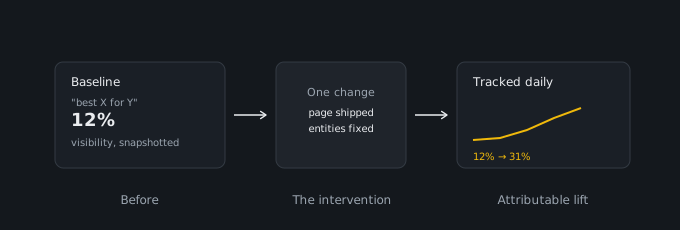
You don't ship landing pages without a control, and AI visibility shouldn't be different. Pick a high-value losing prompt, snapshot the baseline, ship one intervention — the comparison page, the entity fixes, the review push — and let daily tracking record what happens against the baseline.
Because the assistants are probabilistic, single checks lie; repeated runs and volatility tracking separate a real shift from noise. When the lift is real you have an attributable win — 'this page took us from 12% to 31% visibility on this prompt' — which is the kind of sentence that survives a growth review.
/ 06
Compounding, not campaigns
Paid stops when the budget stops. AI visibility behaves more like SEO with a steeper compounding curve: a page that earns its way into an answer keeps getting served for every phrasing of the question, and each citation makes the next one more likely. Early position is cheap; displacing an incumbent later is not.
The operating rhythm fits a growth team as it is: alerts when a competitor takes a top recommendation or your visibility drops past threshold, weekly movement reads, monthly share-of-voice against targets. One more channel in the review — except this one most of your competitors aren't measuring yet.
/ 07 — FOR GROWTH TEAMS
A channel, treated like one
Not sure where to start?
Run the free AI visibility audit. No account needed, and it takes about a minute.