/ 01 — By goal
Get cited by AI assistants
Buyers ask assistants for recommendations before they open a search page. Find out whether you are named, where you rank in the answer, and what to change.
/ 03
AI assistants are the new front page
A growing share of buying research never reaches a results page. People ask ChatGPT, Gemini, Perplexity or Google's AI Overviews, get a synthesized answer with a handful of sources, and stop there. If your brand isn't in that answer, you weren't considered — and unlike a ranking, you can't see the miss happen.
Being cited isn't luck. Assistants favor content that states facts plainly, answers real questions in full, carries consistent brand information across the web, and renders completely without a browser executing scripts. Each of those is checkable — and fixable.
/ 04
Measure it, then move it
Echorank360 treats AI visibility like rankings: something you measure on a schedule, not guess at. The visibility audit scores how quotable your site is today. Monitoring asks the assistants real buyer questions on a schedule and records whether you appear, what's said, and who's cited instead of you.
From there the work is concrete: fix the pages the audit flags, publish answers to the questions you're absent from, and watch mention rates move month over month — the same way you'd watch rankings.
/ 05
Being cited is the new ranking
A growing share of buyers never see a results page. They ask an assistant, get one synthesized answer, and act on it. If your business is in that answer, you win the customer before a click happens; if it isn't, you were never in the running — and no rank tracker will tell you.
Citations don't come from wanting them. Assistants assemble answers from what they can crawl and what the web agrees on. The work is making your pages readable to AI crawlers, your facts consistent everywhere they appear, and your reputation corroborated by sources assistants trust.
/ 06
What makes a business quotable
Assistants echo consensus. A business with clear factual pages, the same name and description across directories and reviews, and third parties saying the same thing gets quoted; a business whose story changes from site to site gets skipped as unreliable.
The mechanics matter too. If your pages render their real content only in the browser, AI crawlers may see an empty shell — plenty of sites are invisible to assistants for that reason alone. Checking what bots actually see is step one, not an afterthought.
/ 07
Measure it like a channel
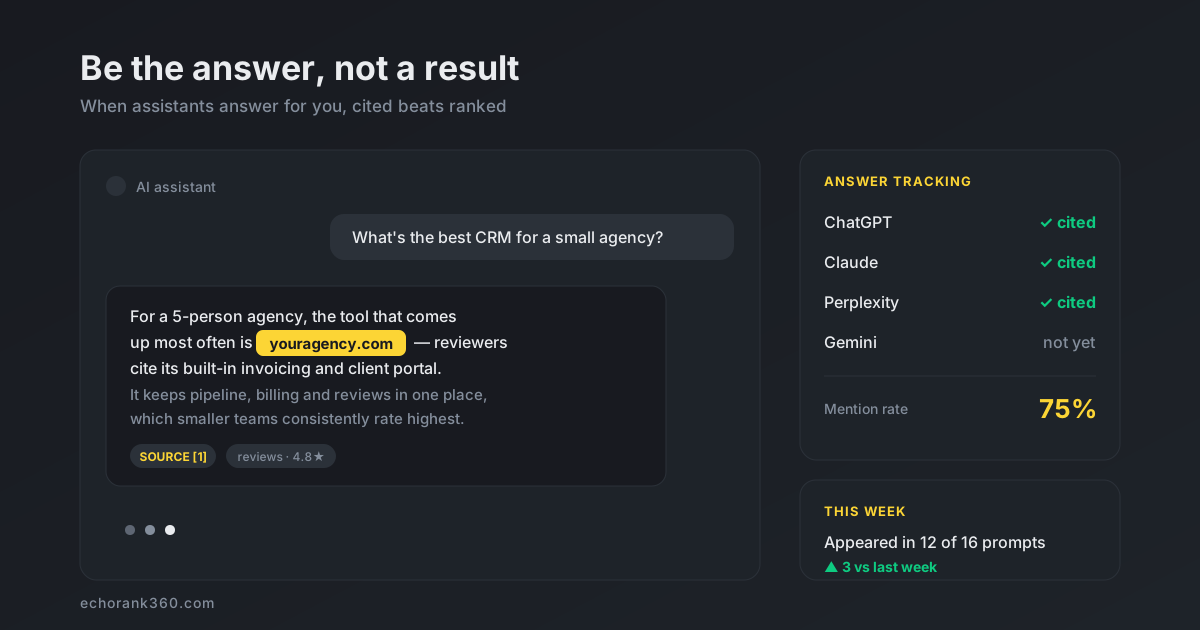
You already treat search and email as channels with numbers. AI answers deserve the same: which prompts mention you, on which engines, how that rate moves week over week, and what changed when it drops.
Once it's measured, it's improvable. A dip on one engine after a content change is a signal, not a mystery — and being able to point at the trend is what turns AI visibility from a talking point into a line on the report.
/ 08 — THE WORKFLOW
From invisible to cited
Not sure where to start?
Run the free AI visibility audit. No account needed, and it takes about a minute.